The Supply-Pile Myth: More Materials Do Not Start a Creative Habit
Start a creative habit with one modest material and a short trial, so you can learn what you enjoy before filling a shelf with supplies.
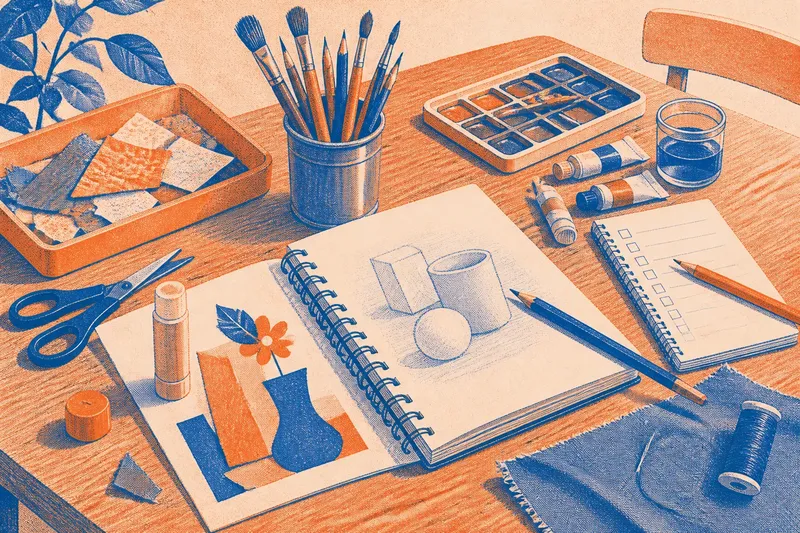
A fresh sketchbook sits beside unopened paint tubes, a tin of brushes, and a shopping list that keeps growing. Starting a creative habit does not require a complete supply collection; it requires one material you can use and a small trial that fits your week.
Buying supplies can feel like progress because it turns an idea into something visible. But a pile cannot tell you whether you enjoy mixing color, cutting paper, shaping clay, or making a mess at the kitchen table. A modest beginning lets you answer that with less clutter and fewer decisions.
Why can more supplies make it harder to begin?
Each material brings choices: which tool to use, how to store it, what project suits it, and whether you need another item before you start. Those decisions can crowd out the pleasant part—the act of making.
A collection can also quietly raise the stakes. If you have bought specialty paper and a polished set of markers, a first attempt may feel as if it ought to be worth the expense. A scrap of paper and a pencil are easier to approach as an experiment. Think of a small supply choice like a single place setting: it is enough to have a meal without outfitting a banquet hall.
This does not mean that fewer supplies are always better. It means that buying should follow a real need you have noticed while making, rather than an imagined project that may never reach the table.
What is one material you can try first?
Choose something that supports the kind of activity you want to do and is easy to put away. Use what you already have if it is in usable condition; otherwise, select one basic item rather than a kit with many pieces.
- For drawing: a pencil and ordinary paper. Try simple shapes, a household object, or a short row of imagined characters.
- For collage: scrap paper, scissors, and a glue stick if those are already available. Gather colors and textures from packaging or old magazines.
- For watercolor: a small student palette and a brush, paired with paper suitable for watercolor. A single palette gives you enough to explore how colors meet.
- For writing by hand: a notebook or a few loose sheets and a pen. Make a tiny scene, a list of invented names, or a description of a place you know.
- For simple mending: a needle, thread, and a fabric scrap. If you are unsure how to handle a particular garment or tool safely, ask someone experienced to show you.
Use the material’s label and the manufacturer’s instructions where they apply. For an ordinary creative trial, though, the useful question is simple: can you begin without a special purchase, or is there one basic item that would make the activity possible?
How can a one-week creative trial work?
Give the idea a week, but leave room for an uneven schedule. The point is not to build a streak or produce a finished object. It is to notice how the activity feels at different moments: before starting, while making, and when putting things away.
- Day one: choose. Pick one material and one small kind of activity. Set aside anything else you think you might need; write down the idea instead of ordering supplies.
- Day two: prepare. Put the material in a container or on a tray that can be cleared easily. Choose a surface where a little paper dust, paint, or thread will not cause trouble.
- Day three: make a first pass. Work on a small, disposable attempt. Stop while it still feels manageable, even if you have not made anything you would keep.
- Day four: let it rest. Leave the work as it is or put it away. Notice whether you feel curious about returning, relieved to have stopped, or interested in changing the activity.
- Day five: make one adjustment. Repeat the activity with a single change, such as a different shape, color, subject, or piece of scrap material. Avoid adding several new tools at once.
- Day six: review the friction. Ask what slowed you down. If the answer is “I could not cut cleanly,” a better pair of scissors may be a practical next purchase. If the answer is “I did not feel like drawing,” more pencils are unlikely to solve it.
- Day seven: choose what happens next. Repeat the same small trial, switch to a related activity, or set the material aside. Each is a useful decision; none requires turning the hobby into a commitment.
Say you have a blank notebook and want to try paper collage. Imagine you cut shapes from a cereal box and arrange them on one page, using a glue stick you already own. You discover that choosing and arranging colors is enjoyable, but the cardboard is too thick to cut neatly. The next sensible move is to try thinner scrap paper or borrow suitable scissors—not to buy a full collage kit.
What should you ask before buying another supply?
A purchase makes sense when it addresses a specific obstacle or opens an activity you have already chosen. Pause before adding an item and ask:
- What exact action will this item let me do?
- Have I tried the activity with materials I already have?
- Is the item a basic requirement, or one option among several?
- Can I borrow, reuse, or substitute something for this trial?
- Do I have a place to store it and a simple way to clear it away?
If you cannot name the action an item enables, keep it on a note rather than in your cart. An idea that survives another session is a better reason to buy than the promise of a flawless setup.
What should you do when the first material disappoints?
Separate the activity from the particular material. If watercolor paper buckles or a pen skips, the trouble may be the tool or surface rather than your interest in making. If the process itself feels dull, switching to a different pastime is just as reasonable.
Keep a short note after each attempt: what you made, what felt easy, and what you would change next time. This is not a scorecard. It is a way to distinguish “I disliked this material” from “I do not want to do this activity,” which point toward different choices.
Which questions help you choose a small creative start?
How many supplies should I buy to start?
Begin with what you already own or one basic material that lets you try the activity. Add another item only when a specific task is blocked or a repeated session gives you a clear reason to expand.
Should I buy a beginner’s kit?
A kit can be convenient if its contents match the activity you want to try and you have a place to keep them. If you are unsure about the pastime, a single supply or a borrowed item can make the first attempt feel less demanding.
What if I do not finish anything?
A trial can be useful without producing a finished piece. Notice whether you wanted to continue, what held your attention, and what you would alter if you tried again.
When is it time to add another material?
Add one when you can name the limitation it addresses, such as paper that will not support a wet medium or thread that does not suit the fabric. Make the choice for the next activity you plan to do, not for a vague future collection.
How do you keep the habit small enough to return to?
At the end of the week, decide on a next trial that is easy to set up and easy to stop. Put the chosen material where you can find it, but keep the work area clear enough that starting does not turn into a cleanup project. If the activity no longer appeals, store the supplies and give yourself permission to try something else.
The supply-pile myth says preparation must come before practice. In reality, a short creative trial gives you information that a shopping list cannot: what you like making, what gets in your way, and which material might actually help. Start with one modest choice, then let your next purchase answer a question your own making has raised.